
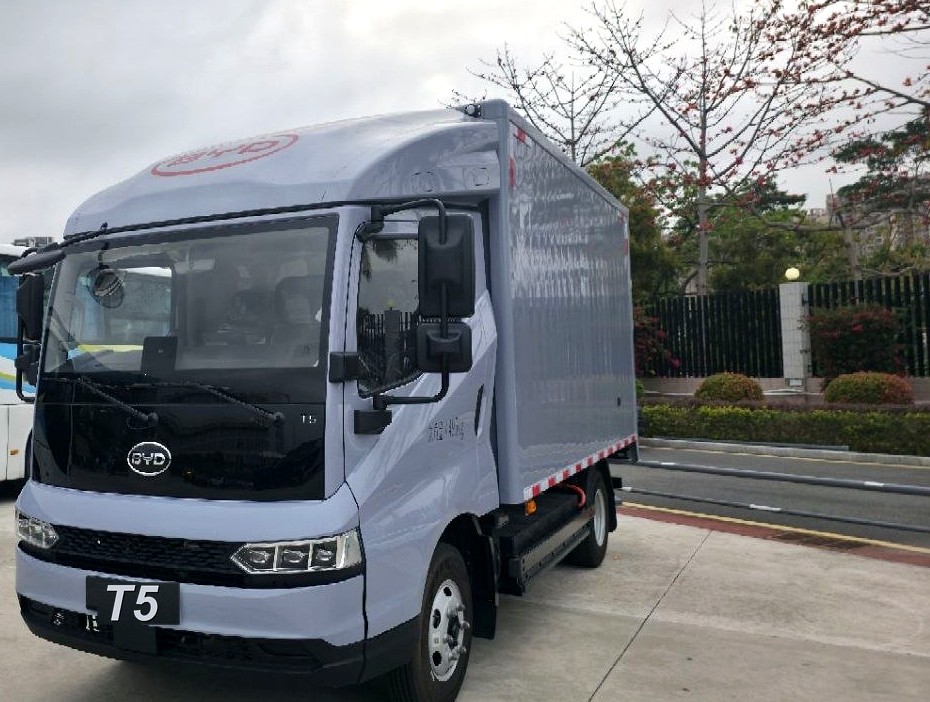
Commercial Technology
Battery technology built for duty cycles
Fleets do not run on showroom numbers. They run on the kilometres between charges, the hours between failures, and the years before a battery is retired. BYD's Blade Battery, Cell-to-Body construction and e-Platform 3.0 are engineered for that reality — high-cycle, high-load, high-temperature commercial duty.
Order your pilot truck
Blade Battery
Lithium iron phosphate, in a blade
The Blade Battery is BYD's in-house LFP (lithium iron phosphate) cell, shaped into a long, thin blade that runs the width of the pack. The geometry lets the cell act as a structural member, removes thousands of joints found in cylindrical packs, and gives heat a shorter path to escape — the three properties a commercial pack needs most.
- Lithium iron phosphate chemistry — engineered for high cycle life and high thermal stability
- Long blade form factor — fewer cells, fewer joints, more usable energy per cubic metre of pack
- Cells act as structural members of the pack and the body — see Cell-to-Body below
- Manufactured in-house by BYD — the same cell powering buses and trucks in service globally
Safety, proven on camera
The nail-penetration test
The nail-penetration test is the industry's harshest single-cell abuse test: a steel nail is driven through a fully charged cell to force an internal short circuit. BYD ran this test publicly on the Blade Battery against a conventional ternary lithium cell — and filmed it. The footage is the simplest answer to the question every fleet operator asks first.
Nail penetration — Blade Battery
A steel nail is driven through a fully charged Blade cell. No fire. No smoke plume. Surface temperature stays in a range a human hand could touch.
Abuse test — repeat run
Repeated abuse testing under the same protocol. The Blade pack continues to hold voltage and refuses to enter thermal runaway.
Pack-level shape & impact
Animation of how the blade geometry distributes load across the pack — and how that geometry transfers into the vehicle body in Cell-to-Body construction.
Test footage produced by BYD. For your fleet's specific operating envelope, our team will provide the model-specific safety documentation on request.
Cell-to-Body
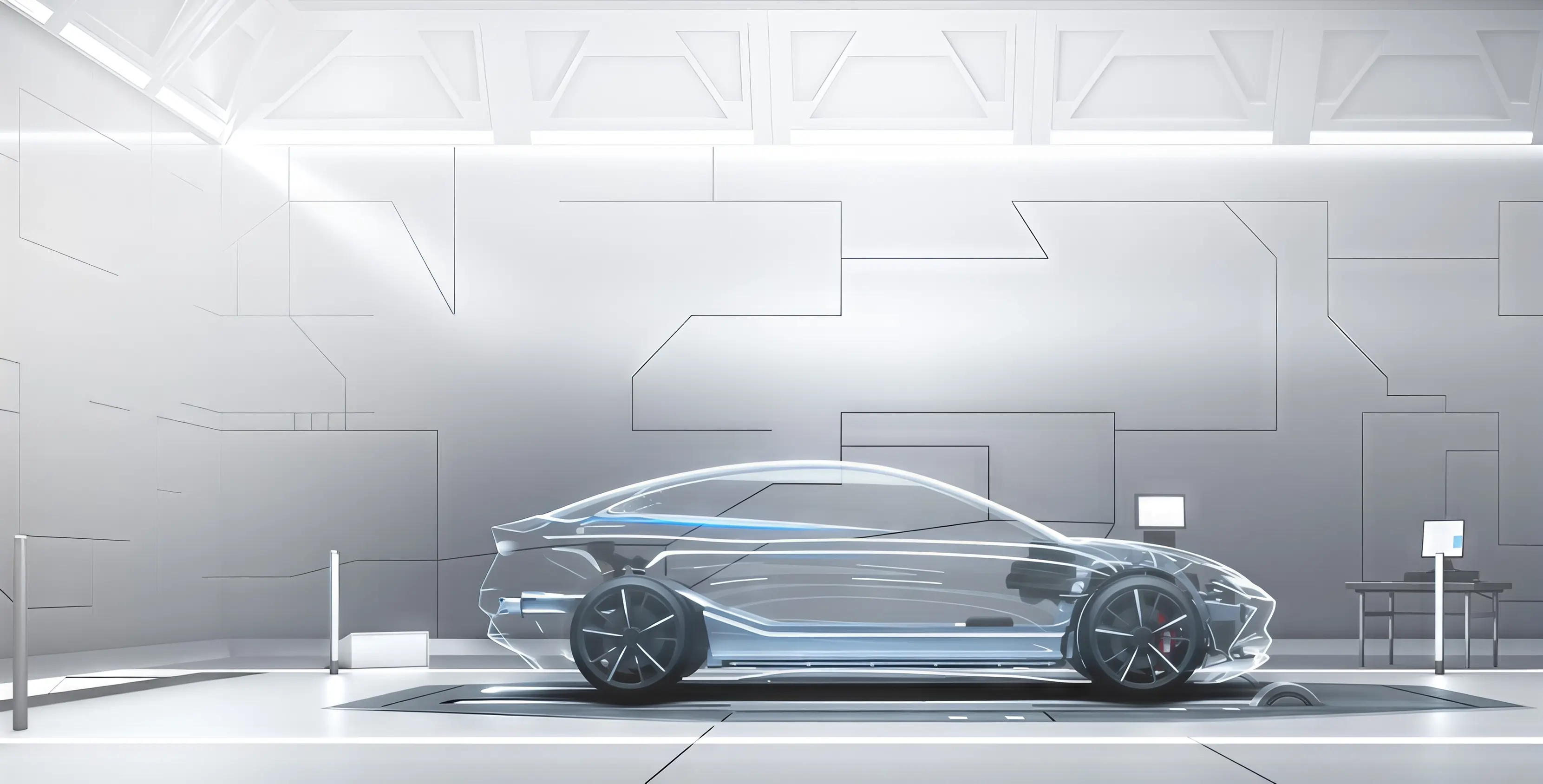
The battery is the floor
In Cell-to-Body (CTB) construction the battery pack is integrated directly into the vehicle's body structure — the pack lid is the floor of the cabin or cargo box. The result is a stiffer chassis, a lower centre of gravity, and more usable space inside the wheelbase. For a commercial vehicle that means more payload room, better handling under load, and a battery that is mechanically protected by the body itself.
- Higher torsional rigidity — sharper handling under heavy payloads
- Lower centre of gravity — improved stability on tropical, uneven roads
- More usable interior and cargo volume per metre of wheelbase
- The pack is mechanically protected by the body cage, not bolted under it
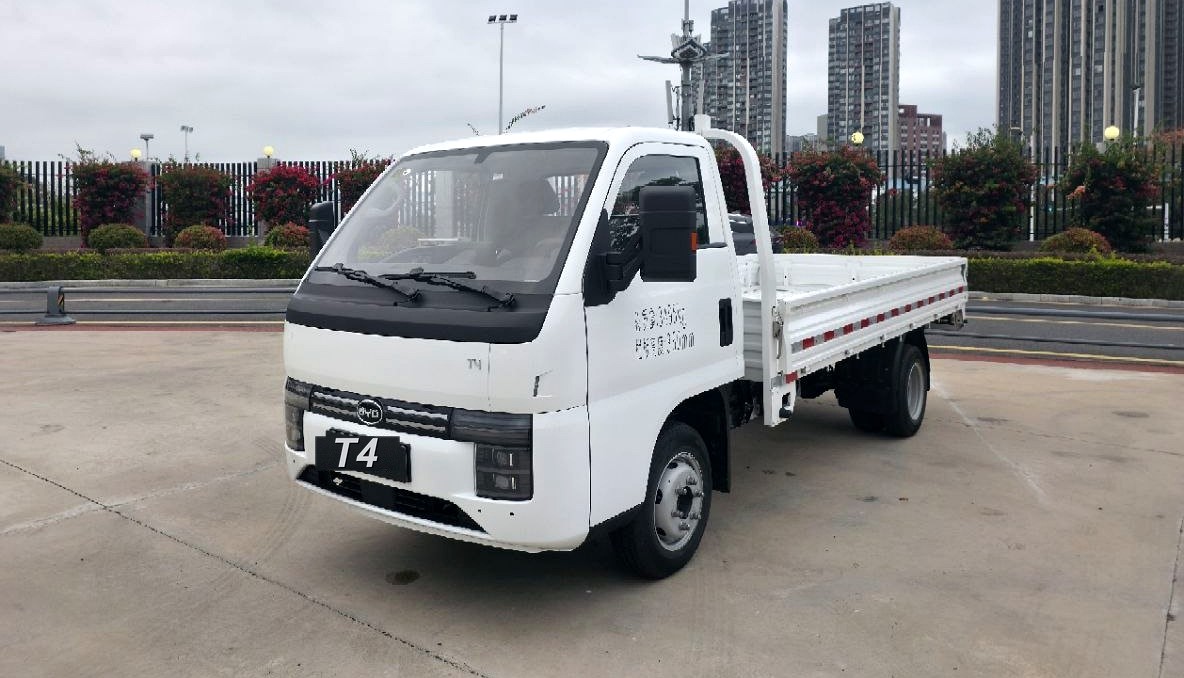
e-Platform 3.0
The electric chassis underneath
e-Platform 3.0 is BYD's purpose-built EV architecture — 8-in-1 electric powertrain, integrated thermal system, and a high-voltage system designed around the Blade pack. It is the platform shared across BYD's global passenger and commercial line-up, which is why service parts, diagnostics and software updates can be standardised across a mixed fleet.
- 8-in-1 integrated electric powertrain — fewer parts, less to service
- Heat-pump thermal management shared between cabin, battery and motor
- High-voltage architecture designed around the Blade pack, not adapted to it
- Shared diagnostics and OTA updates across the BYD vehicle family
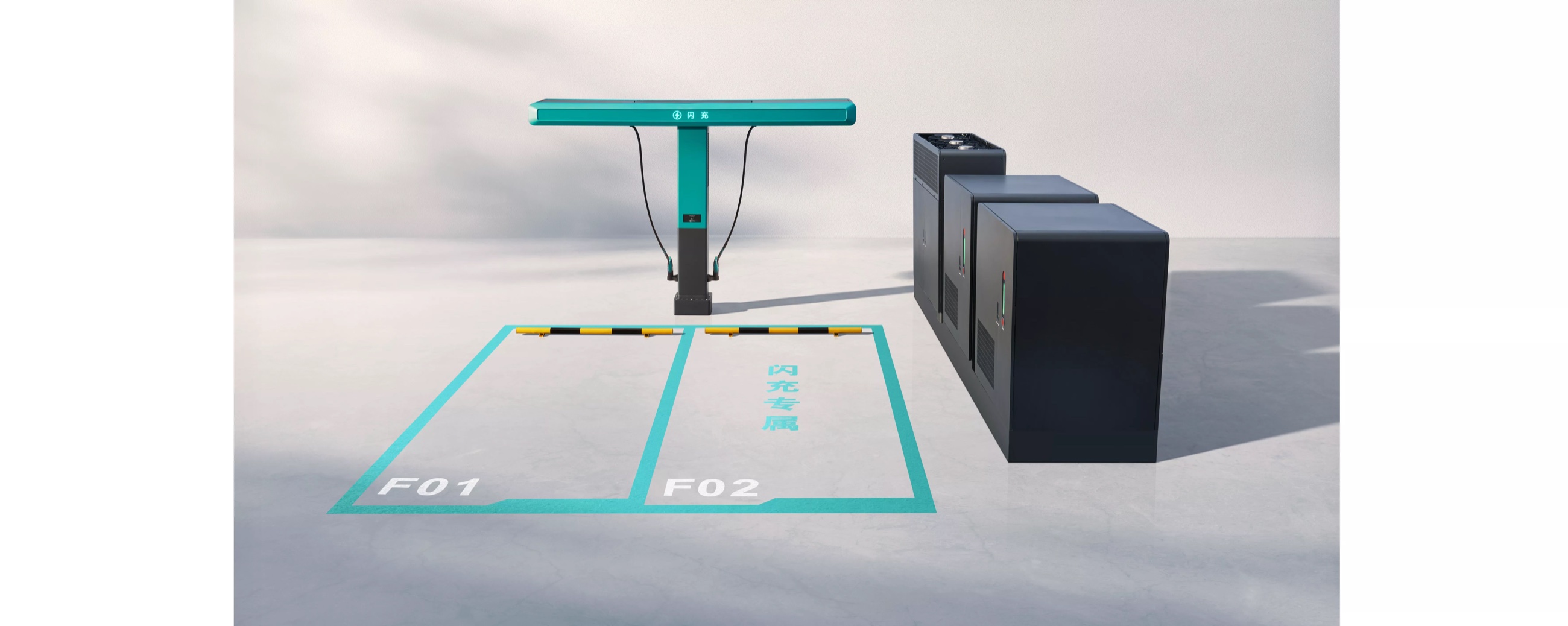
Thermal management
Built for Cambodian heat
A fleet pack in Cambodia does not see one cold winter and twelve mild months — it sees daily 30-plus-degree ambient, monsoon humidity, and DC fast charging in the middle of a working shift. BYD's integrated thermal loop conditions the pack before charging and during heavy load, protecting cycle life in exactly the conditions that punish lesser chemistries.
- Liquid-cooled pack with active pre-conditioning before DC fast charge
- LFP chemistry tolerates high-temperature operation better than NMC
- Heat-pump system shares thermal load between cabin, battery and drive unit
- Cycle life specified for high-cycle commercial duty — confirm with fleet team
Depot charging
Charge on your schedule, not the grid's
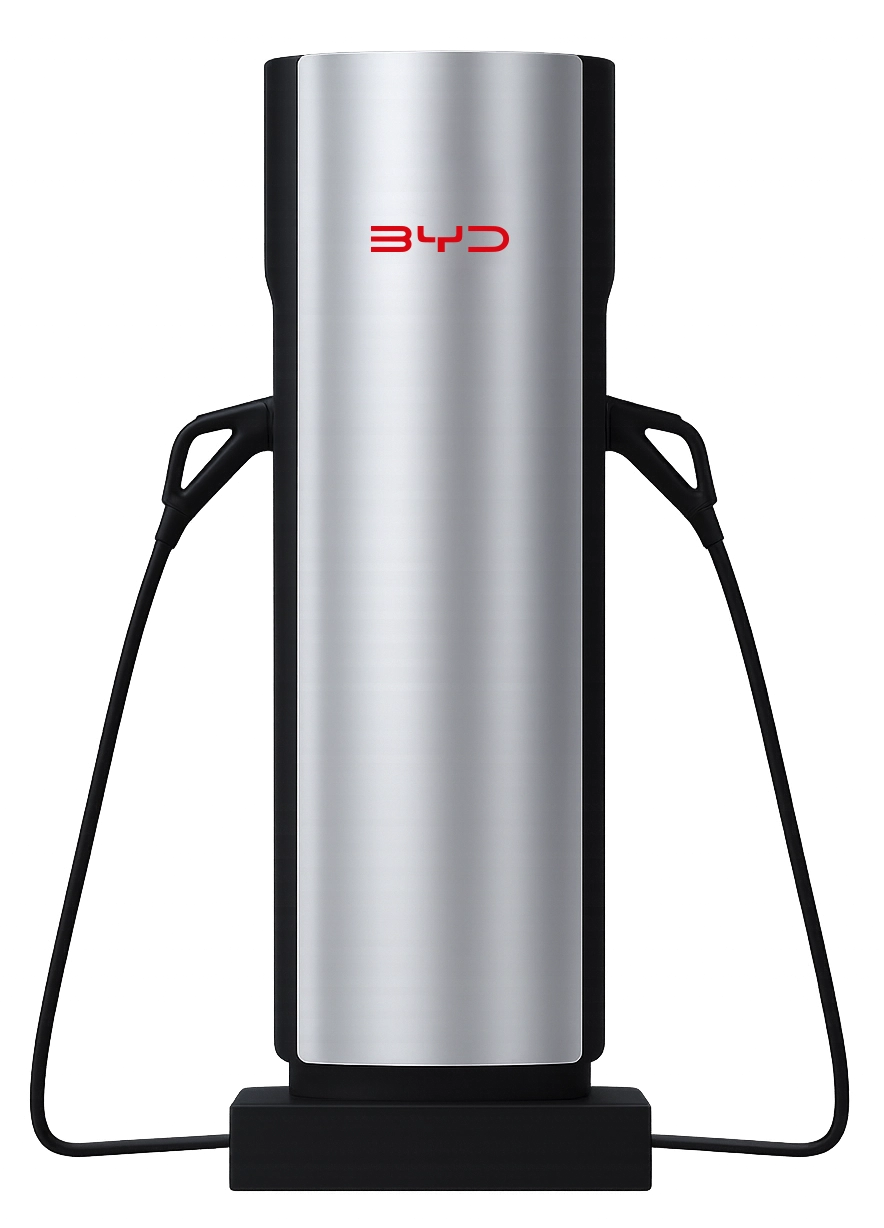
Commercial uptime is a charging strategy as much as a vehicle strategy. The Blade pack and e-Platform 3.0 are designed to accept overnight AC depot charging on cheap off-peak power, with DC fast charging held in reserve for mid-shift top-ups. Our fleet team will size the depot and tariff plan to your routes before the first vehicle is delivered.
- Overnight AC depot charging on off-peak tariffs for the bulk of energy
- DC fast charging held in reserve for mid-shift top-ups, not as the default
- Charge scheduling that respects driver shift patterns and route timing
- Depot load sizing and tariff plan included in the fleet proposal
What we put in writing
Headline coverage for fleet operators
Battery chemistry
LFP (Blade)
Lithium iron phosphate, engineered for high-cycle commercial duty
Pack construction
Cell-to-Body
Structural integration into the vehicle body
Battery warranty
Confirm with fleet team
Model-specific terms provided with the formal fleet proposal
Service network
Modern Auto, Cambodia
Authorized BYD commercial dealer — parts and trained technicians
Specifications shown are general to BYD's commercial technology platform. Model-specific range, payload, charge times and warranty terms are confirmed by the Modern Auto fleet team on a per-vehicle basis.
Run the technology against your route
Share a route, a duty cycle and a current diesel cost per kilometre. Our fleet team will model the energy, the depot plan and the total cost of ownership against the BYD commercial range — and structure your 90-day pilot order (a purchased order, not a demo loan) to prove it on your yard.